In the wire and cable industry, the quality of raw materials directly impacts the final product performance. Among various materials, PVC remains the most widely used due to its excellent mechanical strength, insulation properties, and resistance to flame, oil, and weather. To ensure consistent material quality, the PVC Pelletizing Line plays a vital role in modern production.

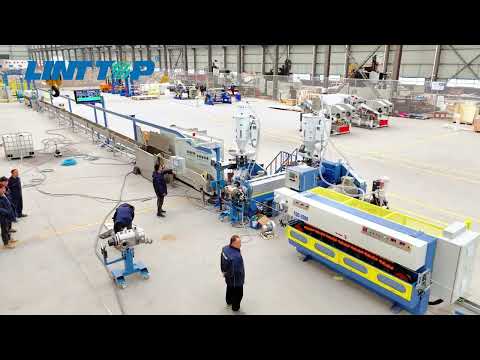
PVC compounds are produced by blending PVC resin with stabilizers, plasticizers, lubricants, fillers, and colorants. Through a well-structured process—starting from precise weighing, followed by uniform mixing, extrusion, pelletizing, and cutting—the PVC Pelletizing Line transforms raw materials into high-quality plastic pellets suitable for cable insulation and sheathing.
During the process, accurate formulation and controlled mixing ensure a homogeneous and easy-flowing material for extrusion. The extrusion stage then applies heat and shear to fully plasticize the mixture before forming pellets. Depending on production needs, both cold cutting (water cooling) and hot cutting (air cooling) methods can be used to achieve optimal pellet quality.
With extensive experience in PVC compounding, modern pelletizing lines can offer fully integrated solutions, including mixing, feeding, extrusion, and cutting systems. This not only improves production efficiency but also guarantees stable material performance, making it an indispensable solution for high-quality cable manufacturing.



没有评论:
发表评论