2026年9月1日星期二

How to Choose a Building Wire Extrusion Line for 1.5–16 mm² Cables

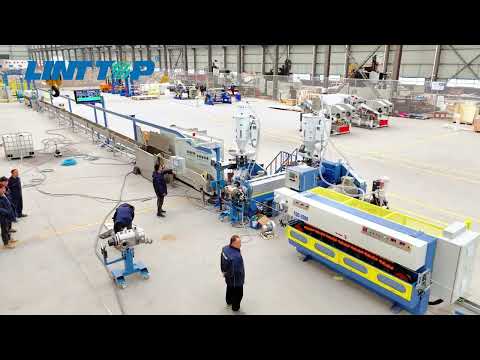
When buying a building wire extrusion line, production stability and insulation consistency are usually more important than simply chasing maximum speed. For manufacturers producing 1.5–16 mm² building wires, the right configuration should match the insulation material, required tolerance, and future product range.


A modern Building Wire Extrusion Line can process PVC, PE, XLPE, and LSHF, giving manufacturers flexibility across different cable applications. An optional co-extruder can also support color skinning and stripping, while a tandem extruder configuration enables THHN cables with PA (Nylon) jacketing.

For buyers, temperature and extrusion control deserve particular attention. The combination of a specially designed screw and barrel with efficient heating and cooling helps maintain stable output across different production speeds. According to the supplied specifications, the monitoring system can maintain insulation thickness within ±2%, while properly designed crossheads and tooling help achieve good concentricity.

The control system is another practical consideration. Siemens PLC + HMI touchscreen provides centralized process monitoring and easier parameter adjustment, while the compact extruder design can simplify installation and maintenance.

Before purchasing, ask suppliers about the actual material range, thickness tolerance, line-speed range, co-extrusion options, and tooling configuration. These factors will tell you much more about whether the line fits your production needs than maximum speed alone.

How to Choose a Cradle Type Cabling Machine for Large-Section Power Cables

When producing 3–6 core power cables, the cabling machine has a direct impact on conductor arrangement, cable roundness, and production stability. For manufacturers handling LV, MV, control, or mining cables, choosing the right Cradle Type Cabling Machine means looking beyond basic cabling speed.

One important factor is back-twist control. A separately driven bobbin rack allows operators to adjust back-twisting or pre-twisting according to the cable structure. This is particularly useful when producing round cables that require back-twisting, as well as fan-shaped conductors that may require different processing conditions.

The Cradle Type Cabling Machine also uses independently driven cages with frequency-conversion control, allowing left- and right-hand rotation while keeping operating noise relatively low. The conical arrangement of the bobbin racks helps create a smoother wire path, which can contribute to more stable cabling.

For buyers, flexibility is another key consideration. Models such as 1000, 1250, and 1600 can support different cabling configurations, including 1+3, 1+4, and 2+3 structures. Optional tape wrapping, steel tape armoring, and filling systems can further expand the machine's application range.

Before purchasing, check the required cable cores, conductor shape, back-twist requirements, reel size, and optional armoring or wrapping processes. Matching the machine configuration to your actual cable portfolio is usually more important than simply choosing the largest or fastest model.

How to Choose a Building Wire Extrusion Line for 1.5–16 mm² Cables

When buying a building wire extrusion line, production stability and insulation consistency are usually more important than simply chasing m...