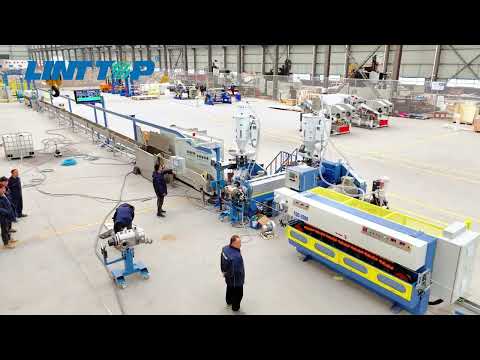
When producing 3–6 core power cables, the cabling machine has a direct impact on conductor arrangement, cable roundness, and production stability. For manufacturers handling LV, MV, control, or mining cables, choosing the right Cradle Type Cabling Machine means looking beyond basic cabling speed.
One important factor is back-twist control. A separately driven bobbin rack allows operators to adjust back-twisting or pre-twisting according to the cable structure. This is particularly useful when producing round cables that require back-twisting, as well as fan-shaped conductors that may require different processing conditions.
The Cradle Type Cabling Machine also uses independently driven cages with frequency-conversion control, allowing left- and right-hand rotation while keeping operating noise relatively low. The conical arrangement of the bobbin racks helps create a smoother wire path, which can contribute to more stable cabling.
For buyers, flexibility is another key consideration. Models such as 1000, 1250, and 1600 can support different cabling configurations, including 1+3, 1+4, and 2+3 structures. Optional tape wrapping, steel tape armoring, and filling systems can further expand the machine's application range.
Before purchasing, check the required cable cores, conductor shape, back-twist requirements, reel size, and optional armoring or wrapping processes. Matching the machine configuration to your actual cable portfolio is usually more important than simply choosing the largest or fastest model.



没有评论:
发表评论