When buying a building wire extrusion line, production stability and insulation consistency are usually more important than simply chasing maximum speed. For manufacturers producing 1.5–16 mm² building wires, the right configuration should match the insulation material, required tolerance, and future product range.
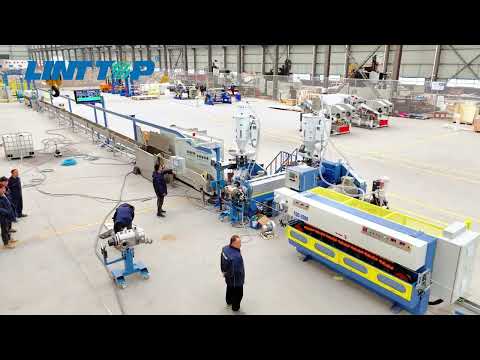
A modern Building Wire Extrusion Line can process PVC, PE, XLPE, and LSHF, giving manufacturers flexibility across different cable applications. An optional co-extruder can also support color skinning and stripping, while a tandem extruder configuration enables THHN cables with PA (Nylon) jacketing.
For buyers, temperature and extrusion control deserve particular attention. The combination of a specially designed screw and barrel with efficient heating and cooling helps maintain stable output across different production speeds. According to the supplied specifications, the monitoring system can maintain insulation thickness within ±2%, while properly designed crossheads and tooling help achieve good concentricity.
The control system is another practical consideration. Siemens PLC + HMI touchscreen provides centralized process monitoring and easier parameter adjustment, while the compact extruder design can simplify installation and maintenance.
Before purchasing, ask suppliers about the actual material range, thickness tolerance, line-speed range, co-extrusion options, and tooling configuration. These factors will tell you much more about whether the line fits your production needs than maximum speed alone.



没有评论:
发表评论