2026年9月16日星期三

How to Choose a Sheathing Extrusion Line for Different Cable Materials

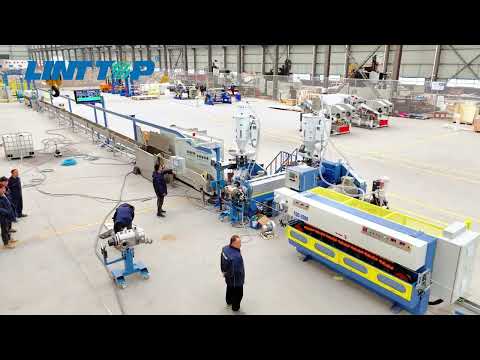
When selecting equipment for cable outer sheathing, material flexibility and extrusion stability are important purchasing factors. A Sheathing Extrusion Line is designed for insulated or stranded cores and can process materials such as PVC, PE, LSZH, Teflon, and Nylon.


For buyers, the screw and barrel configuration deserves particular attention. Different sheath materials have different processing requirements, so using suitable imported extrusion components can help maintain stable output and consistent sheath quality across different cable specifications.

The Sheathing Extrusion Line is therefore useful for manufacturers handling multiple cable products rather than a single material. Before purchasing, compare extrusion output, material compatibility, temperature control, screw/barrel options, and the ease of changing between materials. These factors can have a greater impact on long-term production efficiency than maximum extrusion speed alone.

How to Choose a Laser Welding Production Line for Stainless Steel Tube Optical Fiber Units

When producing optical fiber units for OPGW, OPPC and submarine cables, weld quality directly affects tube strength, sealing, and long-term reliability. A Laser Welding Production Line for Stainless Steel Tube Optical Fiber Unit uses precision laser welding to form stainless steel tubes with a very small heat-affected zone, helping minimize deformation and residual stress.


For buyers, deep penetration and stable welding are key points to evaluate. A strong, well-sealed weld reduces the risk of porosity and cracks, while a smooth weld surface can eliminate post-weld grinding and reduce production costs.

The Laser Welding Production Line for Stainless Steel Tube Optical Fiber Unit also integrates forming, welding, drawing, and fiber/gel filling, making it suitable for continuous production of specialized optical fiber units. Before purchasing, compare weld consistency, tube dimensional accuracy, line speed, material compatibility, and actual production data rather than focusing only on laser power.

2026年9月8日星期二

How to Choose a High Speed Insulation Extrusion Line for 10mm² Cable Production

For conductors up to 10mm², production speed is only one part of the purchasing decision. A High Speed Insulation Extrusion Line can reach up to 1000 m/min, but its real value comes from keeping production moving while reducing operator intervention.


Automatic pay-off and take-up bobbin changing allows continuous operation without stopping the line. Combined with automatic dual take-up, this can significantly reduce downtime during reel changes—an important advantage for high-volume cable production.

Material flexibility also matters. The line supports thermoplastic insulation materials such as PVC and XLPE and can produce single-layer insulation, color skin, or color strip structures. This gives manufacturers more flexibility when handling different wire specifications and customer requirements.

Another practical feature is one-button speed up and down. Instead of relying heavily on manual adjustments, operators can control acceleration and deceleration more easily, helping reduce labor requirements and improve production consistency.

When comparing suppliers, buyers should ask about actual output at different conductor sizes, automatic reel-change cycle time, insulation diameter tolerance, and changeover requirements. These details are more useful for estimating real production capacity and return on investment than maximum line speed alone.

2026年9月7日星期一

How to Choose an Interlocked Armouring Machine for Heavy-Duty Cables

For cables used in mining, offshore, power transmission, and industrial environments, mechanical protection is a major purchasing consideration. An Interlocked Armouring Machine creates a continuous metal interlocked sheath that improves crush resistance, tensile strength, and overall cable durability.


When evaluating an Interlocked Armouring Machine, buyers should look beyond maximum armouring speed. The tension control and synchronization system are critical because inconsistent strip tension can affect interlock quality and the finished cable's mechanical performance. Stable synchronization helps maintain uniform armouring throughout continuous production.

Flexibility is another important factor. Different cable sizes and applications may require changes in armour pitch, winding tension, and operating speed. A user-friendly control system that allows these parameters to be adjusted easily can reduce setup time and make product changes more efficient.

For high-volume cable manufacturers, production stability is just as important as speed. A machine that combines high-speed operation with precise tension control can help increase throughput without sacrificing armour consistency.

Before purchasing, ask suppliers for actual production data on your cable sizes, armour materials, achievable pitch range, tension stability, and changeover time. These details provide a much better basis for comparing machines and estimating the equipment's long-term value than headline speed alone.

2026年9月1日星期二

How to Choose a Building Wire Extrusion Line for 1.5–16 mm² Cables

When buying a building wire extrusion line, production stability and insulation consistency are usually more important than simply chasing maximum speed. For manufacturers producing 1.5–16 mm² building wires, the right configuration should match the insulation material, required tolerance, and future product range.


A modern Building Wire Extrusion Line can process PVC, PE, XLPE, and LSHF, giving manufacturers flexibility across different cable applications. An optional co-extruder can also support color skinning and stripping, while a tandem extruder configuration enables THHN cables with PA (Nylon) jacketing.

For buyers, temperature and extrusion control deserve particular attention. The combination of a specially designed screw and barrel with efficient heating and cooling helps maintain stable output across different production speeds. According to the supplied specifications, the monitoring system can maintain insulation thickness within ±2%, while properly designed crossheads and tooling help achieve good concentricity.

The control system is another practical consideration. Siemens PLC + HMI touchscreen provides centralized process monitoring and easier parameter adjustment, while the compact extruder design can simplify installation and maintenance.

Before purchasing, ask suppliers about the actual material range, thickness tolerance, line-speed range, co-extrusion options, and tooling configuration. These factors will tell you much more about whether the line fits your production needs than maximum speed alone.

How to Choose a Cradle Type Cabling Machine for Large-Section Power Cables

When producing 3–6 core power cables, the cabling machine has a direct impact on conductor arrangement, cable roundness, and production stability. For manufacturers handling LV, MV, control, or mining cables, choosing the right Cradle Type Cabling Machine means looking beyond basic cabling speed.

One important factor is back-twist control. A separately driven bobbin rack allows operators to adjust back-twisting or pre-twisting according to the cable structure. This is particularly useful when producing round cables that require back-twisting, as well as fan-shaped conductors that may require different processing conditions.

The Cradle Type Cabling Machine also uses independently driven cages with frequency-conversion control, allowing left- and right-hand rotation while keeping operating noise relatively low. The conical arrangement of the bobbin racks helps create a smoother wire path, which can contribute to more stable cabling.

For buyers, flexibility is another key consideration. Models such as 1000, 1250, and 1600 can support different cabling configurations, including 1+3, 1+4, and 2+3 structures. Optional tape wrapping, steel tape armoring, and filling systems can further expand the machine's application range.

Before purchasing, check the required cable cores, conductor shape, back-twist requirements, reel size, and optional armoring or wrapping processes. Matching the machine configuration to your actual cable portfolio is usually more important than simply choosing the largest or fastest model.

2026年8月25日星期二

How to Choose a Braiding Machine for Cable Shielding and Armoring

For cable manufacturers, braiding quality directly affects shielding performance, mechanical protection, and production efficiency. Choosing the right Braiding Machine therefore requires more than comparing spindle numbers or maximum speed.

First, consider the cable application and braiding material. Copper, tinned copper, silver-plated copper, aluminum-magnesium alloy, and steel wires require different production configurations. Control, data, marine, mining, and RF cables may also have different requirements for coverage, tension, and braid precision.

Production stability is another important factor. A modern Braiding Machine with PLC and touchscreen control allows operators to monitor production status and adjust parameters more easily. Servo drive and frequency-conversion control can improve synchronization, while automatic lubrication helps maintain stable operation during continuous high-speed production.

Tension control should also be a priority when comparing suppliers. Excessive tension fluctuations can affect braid uniformity and finished cable quality. Features such as tension detection and automatic wire-break stopping provide additional protection against production defects.

For high-volume production, efficiency matters as well. According to the supplied equipment data, high-speed models can achieve more than twice the production efficiency of traditional low-speed braiding machines. However, buyers should evaluate this together with energy consumption, maintenance requirements, spindle capacity, and the materials they actually intend to process.

The best machine is not necessarily the fastest one. Match the braiding system to your cable materials, required coverage, production volume, and quality standards to achieve a better long-term return on investment.

How to Choose a Portal Type Rewinding Line for Cable Production

Rewinding may seem like a simple process, but poor tension control, inaccurate length measurement, or unstable take-up can create problems in the next production stage. For manufacturers handling different conductor and cable sizes, choosing the right Portal Type Rewinding Line can improve both product consistency and packaging efficiency.

A key consideration is pay-off control. Active, passive, and active-passive pay-off options allow the line to handle different wire diameters and production requirements. For high-speed rewinding, braking is equally important. Magnetic powder or mechanical braking can help prevent loose or disordered wire when the line stops.

The Portal Type Rewinding Line can also integrate practical quality-control functions, including meter counting, spark detection, diameter measurement, and automatic alarms for surface defects or out-of-tolerance diameter. These features allow manufacturers to identify problems during rewinding rather than discovering them later.

When comparing suppliers, buyers should also check reel compatibility. Support for DIN-standard metal and wooden spools can make the equipment easier to integrate into existing production systems.

Rather than focusing only on rewinding speed, evaluate tension control, braking, inspection functions, reel compatibility, and electrical components. These details have a direct impact on cable quality, downtime, and the long-term operating cost of the line.

2026年7月28日星期二

What Should You Look for in a Fine Wire Drawing Machine?


Producing fine copper wire requires more than simply increasing drawing speed. As wire diameters become smaller, factors such as equipment stability, wire surface quality, and maintenance efficiency become increasingly important. Choosing the right Fine Wire Drawing Machine can help manufacturers achieve consistent product quality while reducing production costs over the long term.

One feature worth evaluating is the machine's structural design. A Fine Wire Drawing Machine with a double-layer drawing drum arrangement can significantly reduce the equipment footprint, making it a practical choice for factories where production space is limited. A compact layout also makes it easier to integrate the machine into existing wire drawing lines without major workshop modifications.

Another key consideration is component durability. Tower wheels, guide wheels, counting wheels, and traversing wheels with ceramic coatings offer better wear resistance than conventional components. This helps extend service life, reduce maintenance frequency, and maintain stable wire quality during continuous production.

When comparing different suppliers, don't focus only on output capacity. Ask about equipment layout, wear-resistant materials, operating noise, and maintenance requirements. These factors directly affect production efficiency, equipment reliability, and total operating costs. For manufacturers producing fine copper conductors in large volumes, selecting a machine with a compact design and durable components can deliver greater value throughout its service life.

How to Evaluate an Intermediate Wire Drawing Machine Beyond Drawing Speed


When purchasing an intermediate wire drawing machine, many manufacturers focus on maximum drawing speed. However, experienced cable producers know that long-term performance depends just as much on transmission efficiency, wire surface quality, and maintenance costs. Choosing the right Intermediate Wire Drawing Machine can improve production stability while reducing operating expenses over the machine's lifetime.

One of the first aspects to compare is the transmission system. A high-quality Intermediate Wire Drawing Machine with full-precision gear transmission delivers higher power efficiency, lower operating noise, and fewer mechanical failures than conventional designs. This means less unplanned downtime and more reliable continuous production, especially for manufacturers processing medium-sized copper conductors.

Lubrication is another critical factor that is often overlooked during equipment selection. A fully immersed drawing drum lubrication system helps dissipate heat more effectively and reduces wear on both the drawing dies and the drum surface. As a result, manufacturers can achieve smoother wire finishes while extending the service life of key components, lowering maintenance and replacement costs.

Before making a purchasing decision, ask suppliers about transmission accuracy, lubrication design, and maintenance requirements rather than comparing drawing speed alone. These factors have a direct impact on wire quality, equipment reliability, and total operating cost, making them more valuable indicators of long-term return on investment for modern wire and cable production.

2026年7月12日星期日

Is an RBD Machine with Individual Drivers Worth the Investment? Key Factors Buyers Should Consider


When selecting a rod breakdown machine, many manufacturers compare drawing speed and capacity first. However, for companies producing aluminum or aluminum alloy conductors, the drive system can have an even greater impact on product quality and operating costs. An RBD Machine with Individual Drivers is designed to address the limitations of traditional gear-driven drawing machines.

Unlike conventional systems, each drawing drum on an RBD Machine with Individual Drivers is powered by its own motor. This greatly reduces sliding friction between the wire and the drum during drawing, helping protect the wire surface while extending the service life of both the drawing dies and the drums. This advantage is especially valuable when processing aluminum alloy wire, where surface quality is critical.

Energy efficiency is another factor worth considering. Independent motor control can reduce electricity consumption by approximately 20% compared with traditional gear-driven machines. When producing larger wire sizes, operators can switch off unused motors, further lowering energy usage without affecting production.

The machine also offers greater production flexibility. Since each die's elongation can be adjusted independently, manufacturers can optimize the drawing process for different conductor specifications. In addition, the in-line drum arrangement simplifies die changes, allowing operators to replace only the finished die and reduce setup time when changing wire sizes.

Before making a purchasing decision, look beyond maximum drawing speed. Ask how the drive system affects wire quality, energy consumption, die life, and maintenance costs. Over years of continuous production, these factors often deliver a greater return on investment than production speed alone.

How to Choose a Copper / Aluminum RBD Machine for Better Wire Quality and Lower Production Costs

If you're planning to invest in a rod breakdown line, it's easy to compare machines based on drawing speed alone. However, experienced cable manufacturers know that long-term productivity depends just as much on wire quality, maintenance efficiency, and process flexibility. Choosing the right Copper / Aluminum RBD Machine can have a direct impact on both production costs and conductor performance.


One factor worth paying close attention to is the drive system. Machines that use separate motors for the constant-speed wheel and drawing wheels make die replacement faster and simplify operation, reducing downtime during product changeovers. If your factory regularly produces different conductor sizes, this feature can improve overall production efficiency.

Wire quality is another important consideration. A Copper / Aluminum RBD Machine with an optimized coolant supply helps remove surface oxides while protecting the drawing dies, producing brighter wire with a smoother surface finish. The ability to process 8.0 mm copper rods and 9.5 mm aluminum rods also provides the flexibility needed for a wide range of conductor specifications.

For manufacturers producing power cables or other high-performance conductors, an optional online annealing system is worth considering. By combining continuous drawing and annealing in a single process, the equipment can improve wire ductility, electrical conductivity, and mechanical performance while eliminating an additional production step.

Before choosing a supplier, compare more than just maximum output. Ask about die change efficiency, cooling performance, annealing options, and take-up configurations such as double-wheel spoolers or basket coilers. These practical details often have a greater influence on production efficiency and long-term operating costs than speed specifications alone.

2026年7月6日星期一

How to Choose a Double-head Motorized Pay-Off for High-Speed Wire and Cable Production

When investing in a new wire and cable production line, buyers often focus on the main machine while overlooking the importance of the pay-off system. In reality, unstable wire tension during pay-off can lead to wire deformation, inconsistent stranding quality, and unnecessary downtime. Choosing the right Double-head Motorized Pay-Off can help avoid these issues and improve the overall stability of the production line.


One of the most important factors to evaluate is tension control. A high-quality Double-head Motorized Pay-Off uses pneumatic tension regulation to automatically adjust according to the running speed of the line, maintaining constant tension from full bobbins to nearly empty ones. This is particularly valuable when processing bare copper, tinned copper, or multi-strand conductors, where even small tension fluctuations can affect the final cable quality.

Another feature worth considering is the braking system. Electromagnetic braking helps prevent wire disorder during sudden stops, reducing the risk of tangling and minimizing production interruptions. For manufacturers operating at speeds of up to 250 m/min, this function can improve both production efficiency and operator safety.

Compatibility is another key purchasing consideration. A dual-head pay-off should integrate easily with bunching machines, tinning lines, and single- or double-twist cabling machines while accommodating different bobbin sizes. A compact design can also save valuable floor space, making it easier to optimize factory layouts.

Before making a purchasing decision, compare more than just the maximum operating speed. The tension control method, braking performance, equipment compatibility, and long-term reliability will have a much greater impact on production efficiency and maintenance costs than speed alone.

How to Choose a Tubular Stranding Machine for High-Speed Cable Production


A Tubular Stranding Machine is widely used for producing copper, aluminum, and ACSR conductors. However, not all machines offer the same level of productivity or maintenance efficiency. If your factory is planning to increase production capacity, the transmission system is one of the first things to evaluate.

Many traditional machines still use a ground-shaft drive, which involves multiple gearboxes and mechanical transmission components. While this design has been proven over time, it also increases wear, operating noise, and maintenance requirements after long-term operation.

Modern Tubular Stranding Machine designs use independent motors to drive each cage and capstan separately. This simplifies the transmission structure, improves speed stability, and allows more flexible pitch adjustment. For manufacturers producing different conductor specifications, this means faster product changeovers and less downtime.

Another feature worth considering is the machine's manufacturing accuracy. A cage processed by CNC machining and dynamically balanced before delivery can maintain smoother operation at high speeds, helping reduce vibration and extend bearing life.

When selecting a tubular strander, don't focus only on the maximum rotation speed. The drive system, control method, machining precision, and protection functions will have a greater impact on long-term operating costs. For cable manufacturers seeking stable production and easier maintenance, these factors often determine the real return on investment.

2026年7月2日星期四

Why More Cable Manufacturers Are Choosing Automatic Coiling and Binding Machines

As labor costs continue to rise and production demands increase, many wire and cable manufacturers are looking for smarter ways to improve efficiency. One area that is often overlooked is the packaging process. While traditional manual coiling and binding methods have been used for years, they can be time-consuming, labor-intensive, and inconsistent. This is where the Automatic Coiling and Binding Machine makes a significant difference.


The biggest advantage of the Automatic Coiling and Binding Machine is its ability to automate the entire coiling and binding process. Instead of relying on operators to manually wind and package cables, the machine performs these tasks quickly and accurately, producing neat and uniform coils every time. Whether processing round wires or flat cables, manufacturers can achieve a professional appearance that enhances product value and customer satisfaction.

Another reason for its growing popularity is productivity. The machine can deliver output levels up to four times higher than traditional manual winding methods. For cable manufacturers handling large production volumes, this means faster delivery times, lower labor costs, and improved operational efficiency.

The intelligent control system also adds considerable convenience. Equipped with a PLC and touchscreen interface, the machine is easy to operate and can store up to 99 different product specifications. Switching between products takes only a few moments, helping reduce setup time and increase production flexibility.

In addition, automatic fault detection and adjustable binding tension ensure reliable performance across different cable types. By combining automation, consistency, and efficiency, this equipment has become an essential tool for manufacturers aiming to modernize their packaging operations and stay competitive in today's market.

2026年6月30日星期二

Bow Twister: The High-Efficiency Solution for Modern Cable Cabling


In today’s highly competitive wire and cable industry, manufacturers are constantly seeking ways to improve productivity while reducing production costs. The Bow Twister has become one of the most effective solutions for achieving these goals, offering outstanding efficiency and reliability in the cabling process. It is widely used for the production of control cables, low-voltage power cables, rubber-sheathed cables, mining cables, and overhead insulated cables.

One of the key advantages of the Bow Twister is its exceptional production efficiency. Thanks to its unique structural design, the machine can achieve more than twice the productivity of a traditional tubular strander and more than five times that of a conventional cage stranding machine. This significant increase in output helps manufacturers reduce operating costs, improve profitability, and meet growing market demand without expanding production space.

The machine is equipped with a twisting bow made from imported carbon fiber and glass fiber composite materials. This advanced design provides high strength, lightweight construction, and low operating noise, making it ideal for high-speed continuous production. Its small moment of inertia further enhances rotational speed and operational stability, ensuring consistent cable quality even during long production runs.

In addition, the machine features a simple structure that allows for easy operation and maintenance, reducing downtime and maintenance costs. The capability to achieve 100% back twist ensures excellent cabling quality and product consistency. With its combination of high efficiency, flexible cable configurations, and reliable performance, this equipment has become an ideal choice for manufacturers seeking large-scale, continuous, and cost-effective cable production.

Copper Wire Recycling Machine: A Sustainable Solution for Cable Waste Recovery


As industries continue to expand and modern communication networks develop rapidly, the amount of discarded wires and cables is increasing every year. Traditional recycling methods, such as burning cable insulation to recover metal, not only waste valuable resources but also cause serious environmental pollution and health hazards. The Copper Wire Recycling Machine offers an efficient and eco-friendly alternative, helping manufacturers and recycling companies recover valuable materials while supporting a sustainable circular economy.

The Copper Wire Recycling Machine is designed to process various types of scrap cables, including communication cables and mixed wires that are difficult to handle with conventional wire stripping equipment. Through advanced crushing, separation, and sorting technologies, the machine efficiently separates copper from plastic insulation, producing high-purity copper granules and recyclable plastic materials. The recovered copper can be directly used in smelting, casting, or the production of copper rods, electrolytic copper powder, and electronic components.

One of the key advantages of this equipment is its high level of automation. The PLC control system ensures stable operation through automatic feeding and alarm functions. The integrated crusher and separator system features a compact design that is easy to transport and install. In addition, the high-precision airflow separator can achieve sorting efficiencies of up to 95–99%, maximizing material recovery rates.

To further improve environmental performance, the machine is equipped with pulse dust collection and air filtration systems that effectively control dust emissions. Combining high efficiency, low environmental impact, and excellent resource recovery capabilities, this recycling solution represents an ideal choice for modern cable waste processing and sustainable metal recovery.

Boosting Conductor Production Efficiency with Double Twist Stranding Machine


As the demand for high-quality power cables continues to increase, manufacturers are looking for equipment that can deliver higher productivity, lower operating costs, and consistent product quality. The Double Twist Stranding Machine has become an ideal solution for stranding copper, aluminum, and aluminum alloy conductors, especially for power cable conductors with 19 wires or fewer.

One of the biggest advantages of the Double Twist Stranding Machine is its innovative double-pitch stranding technology. Unlike conventional single-twist machines, it generates two stranding pitches during each rotation of the bow, effectively doubling production efficiency. This makes it a highly cost-effective alternative to traditional tubular stranders and rigid frame stranders for specific conductor applications while requiring significantly less factory floor space.

The machine is equipped with a high-strength carbon fiber twisting bow that ensures stable operation at high speeds. Independent motor drives are used for the twisting bow, traction system, and take-up unit, providing precise control and improved synchronization throughout the production process. In addition, the integrated compression device enables the production of compact stranded conductors, helping manufacturers meet stricter product specifications.

To further enhance performance, the machine features a user-friendly touchscreen control system with stepless pitch adjustment, allowing operators to quickly modify production parameters. A fully enclosed soundproof safety cover keeps operating noise below 85 dB, creating a safer and more comfortable working environment. Combined with precise tension control and automatic electromagnetic braking for wire break detection and fault protection, this equipment offers an efficient, reliable, and modern solution for cable conductor manufacturing.

2026年6月28日星期日

Why Modern Planetary Strander Technology Is Transforming Cable Manufacturing

In the wire and cable industry, achieving high-quality stranding with maximum production efficiency is a constant goal. The Planetary Strander is one of the most important machines for manufacturing copper stranded wires, aluminum stranded wires, steel stranded wires, ACSR conductors, insulated cable cores, and OPGW cables. With continuous technological advancements, modern planetary stranding equipment has significantly improved upon the limitations of traditional ground-shaft-driven machines.


The Planetary Strander developed with independent motor drive technology eliminates the need for complex ground shaft transmission systems, multi-stage gearboxes, and centralized mechanical drives. As a result, the machine operates with lower noise, reduced mechanical wear, and simplified maintenance requirements. This innovative design not only improves reliability but also creates a cleaner and more comfortable production environment.

Another major advantage is its intelligent control system. Through a user-friendly touch screen interface, operators can easily set, display, and adjust production parameters in real time. The machine also supports stepless pitch adjustment over a wide range, allowing manufacturers to optimize stranding processes and meet the requirements of different cable products without being limited by fixed gearbox ratios.

In addition, the advanced planetary gear structure enables 100% back-twisting capability, ensuring superior strand quality and consistency. By combining flexible operation, high efficiency, and reduced maintenance costs, this equipment provides an ideal solution for modern cable manufacturers seeking higher productivity and enhanced product performance in a competitive market.

Advancing Medium and High Voltage Cable Production with Triple-layer Co-extrusion Dry-cure CCV Line


As the demand for reliable medium- and high-voltage power transmission continues to grow, cable manufacturers require advanced production equipment capable of delivering exceptional insulation quality and process stability. The Triple-layer Co-extrusion Dry-cure CCV Line is specifically designed to meet these requirements, providing continuous production of 6–35kV and 35–132kV XLPE insulated power cables with superior efficiency and precision.

One of the key advantages of the Triple-layer Co-extrusion Dry-cure CCV Line is its advanced three-layer co-extrusion technology. Equipped with conductor shield, insulation, and insulation shield extruders, the system ensures uniform layer distribution and excellent concentricity throughout the production process. The specially designed co-extrusion crosshead minimizes eccentricity during speed adjustments and enables stable operation, allowing high-quality finished cables to be produced after only 30–40 meters of startup.

The line is fully controlled by a computer-based system with a user-friendly touch screen interface and Profibus communication. Operators can easily monitor production parameters, save process recipes, and recall them whenever needed, significantly improving production consistency and reducing setup time.

In addition, the equipment features an advanced sag control system with non-contact measurement technology. Combined with DC speed regulation and AC frequency conversion control, it offers high anti-interference capability and precise process management. These features help ensure consistent cable quality, higher production efficiency, and reliable performance, making this production line an ideal solution for modern XLPE power cable manufacturing.

How to Choose a Sheathing Extrusion Line for Different Cable Materials

When selecting equipment for cable outer sheathing, material flexibility and extrusion stability are important purchasing factors. A Sheathi...